
Steam Methane Reforming: How Most Hydrogen Is Made

Steam methane reforming is the main way hydrogen is made today: natural gas reacts with very hot steam over a catalyst, which pulls the hydrogen out of the methane and the water and leaves carbon dioxide behind. In the United States, the Department of Energy says 95% of hydrogen is made by natural gas reforming in large central plants, and steam methane reforming is the most common version of it.
If you have heard hydrogen described as grey, blue or green, this is where those colours start. Grey hydrogen is steam methane reforming with the carbon dioxide released to the air. Blue hydrogen is the same process with some of that carbon dioxide captured. Green hydrogen skips natural gas entirely and splits water with renewable electricity. This guide walks through the reforming process step by step, then puts it side by side with electrolysis.
How steam methane reforming works, step by step
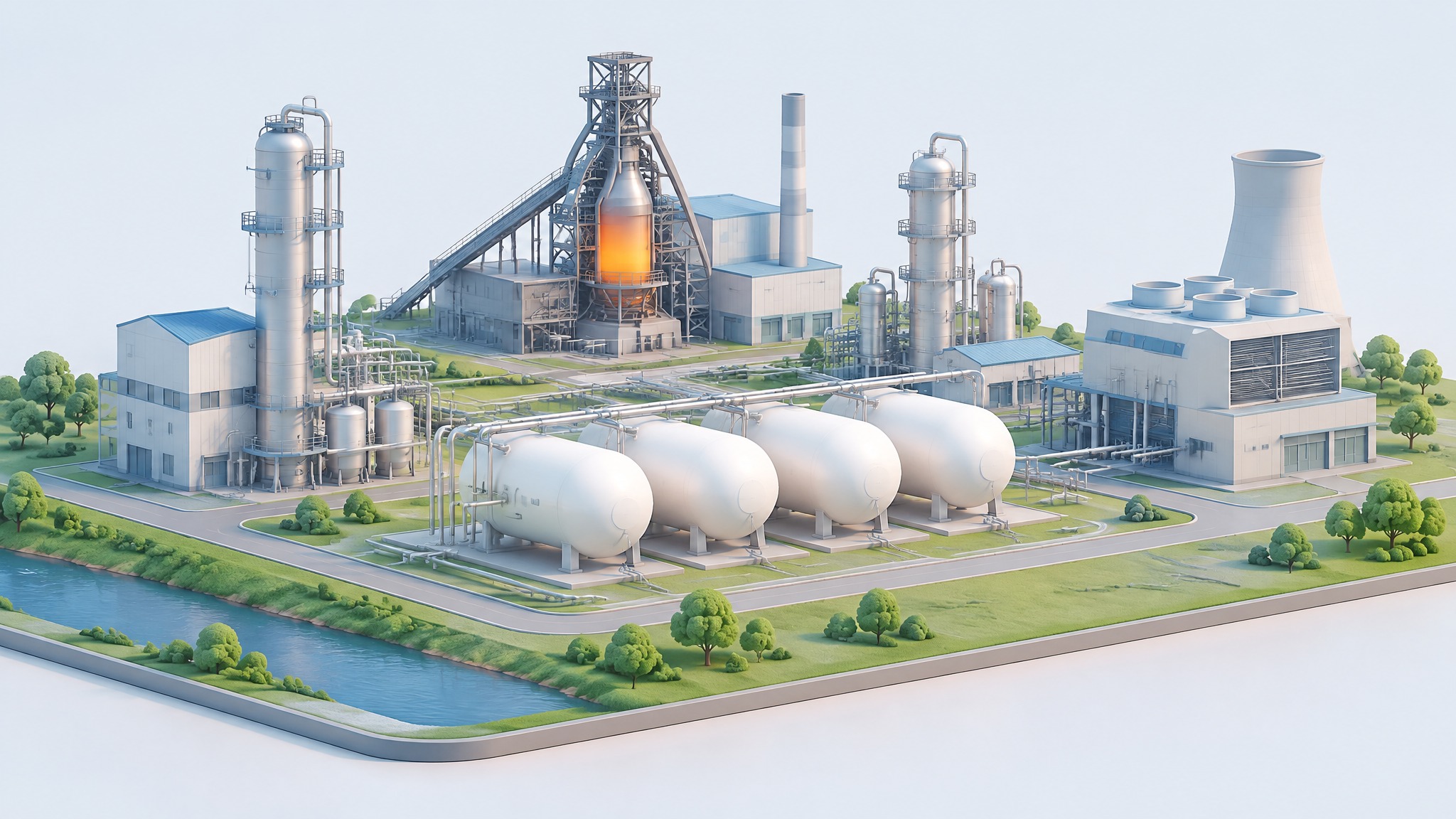
A reforming plant is a chain of three main stages. Each one does a single job.
Reform it with steam. Natural gas is mostly methane (CH4). The methane reacts with steam in the presence of a catalyst. The US Department of Energy gives the conditions as steam at 700–1,000°C and a pressure of 3–25 bar. The reaction is CH4 + H2O (+ heat) → CO + 3H2. It absorbs heat, so heat must be supplied from outside for the reaction to keep going.
Shift the carbon monoxide. The gas coming out still contains carbon monoxide. In the water-gas shift reaction, CO + H2O → CO2 + H2, extra steam turns that carbon monoxide into carbon dioxide and releases more hydrogen.
Purify the hydrogen. Finally, the DOE notes, carbon dioxide and other impurities are removed in a step called pressure swing adsorption, leaving essentially pure hydrogen.
A simple way to picture it:
Natural gas + steam → [hot reformer + catalyst] → hydrogen + carbon monoxide → [shift reactor + more steam] → hydrogen + carbon dioxide → [purifier] → pure hydrogen out, carbon dioxide out
There is a close cousin called partial oxidation. Instead of steam, the methane reacts with a limited amount of oxygen. The DOE describes it as releasing heat rather than needing it, and as typically faster than steam reforming.
Where the hydrogen and the carbon actually come from
A surprising detail for beginners: not all the hydrogen comes from the gas. Add the two reactions together and you get CH4 + 2H2O → CO2 + 4H2. Of the four hydrogen molecules produced, two come from the methane and two come from the water.
That same equation shows why carbon dioxide is unavoidable in this process. Every carbon atom in the methane leaves the plant as carbon dioxide unless it is captured. Here is an illustrative calculation using only the chemistry, before counting the energy used for heat:
Per 1 kg of hydrogen (reaction chemistry only) | Amount |
Methane used as feedstock | about 2.0 kg |
Water consumed in the reactions | about 4.5 kg |
Carbon dioxide released by the reactions | about 5.5 kg |
Illustrative: calculated from molar masses of CH4, H2O, CO2 and H2 for the overall reaction above. Real plants also need energy to heat the reformer, so their totals are higher.
Real-world emissions are higher than the chemistry alone suggests. The IEA's Global Hydrogen Review 2024 puts unabated natural gas hydrogen at 10–12 kg of CO2-equivalent per kg of hydrogen.
Grey, blue and green hydrogen explained
The colour labels are shorthand for where the hydrogen came from and what happened to the carbon. They are informal labels, not precise standards, so the emissions behind them matter more than the colour.
Label | How it is made | What happens to the carbon |
Grey | Steam methane reforming of natural gas | Released to the air |
Blue | Natural gas reforming with carbon capture | Part of the CO2 is captured and stored |
Green | Electrolysis of water using renewable electricity | No carbon in the process |
"Blue" covers a wide range. The IEA describes carbon capture options ranging from 55–70% capture to above 90%, with higher capture costing more per tonne of CO2. It also stresses that carbon capture alone is not enough: methane leaks upstream and midstream in the gas supply chain must also be tackled for blue hydrogen to be genuinely low-emission.
Steam methane reforming vs electrolysis
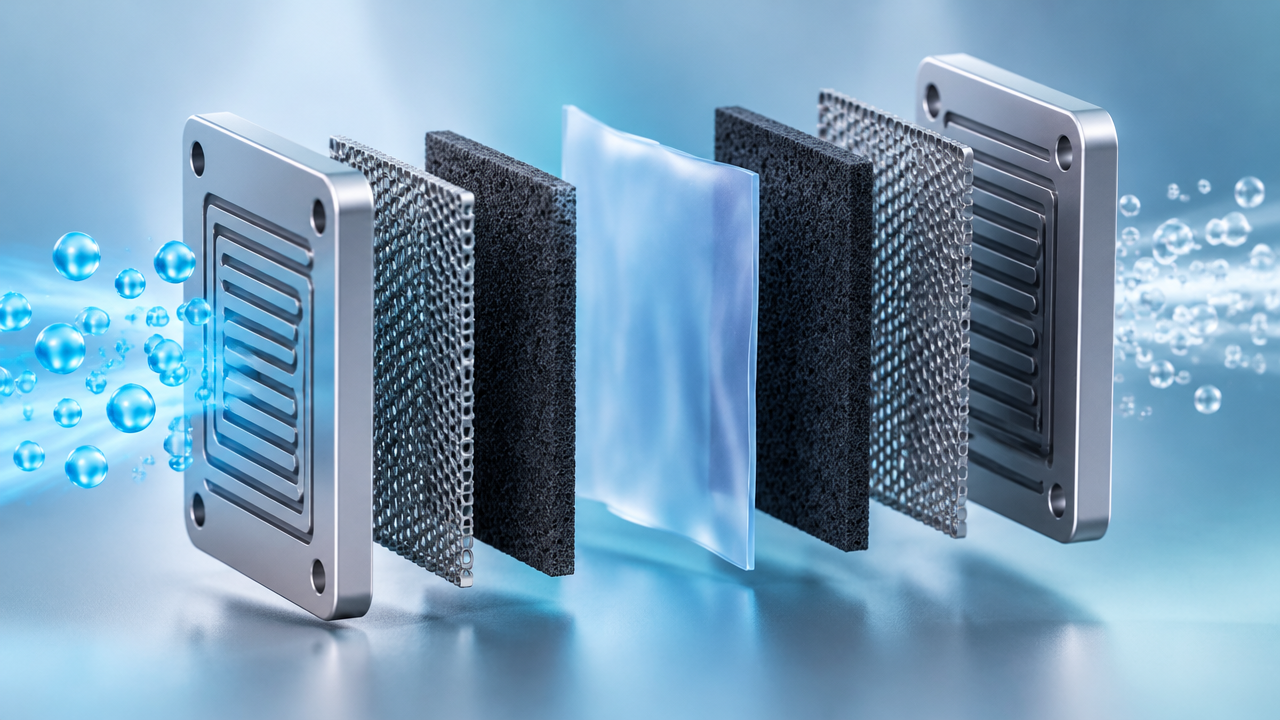
Electrolysis takes a completely different route. The DOE describes it simply: electricity splits water into hydrogen and oxygen inside a cell with an anode, a cathode and an electrolyte. The three main types differ in that electrolyte:
PEM electrolyzers use a solid plastic membrane and run at about 70–90°C.
Alkaline electrolyzers use a liquid potassium or sodium hydroxide solution and run at about 60–90°C.
Solid oxide electrolyzers (SOEC) use a ceramic and run at about 650–850°C, using steam and outside heat to cut the electricity needed.
The key trade-off is energy source. Reforming runs on natural gas. Electrolysis runs on electricity, so its emissions depend entirely on how that electricity is made. The IEA says the power used needs to be below roughly 200–240 g of CO2 per kWh for electrolysis to beat unabated gas reforming on emissions. Run an electrolyzer on a fossil-heavy grid and it can be worse than grey hydrogen.
Water use also differs. Splitting water directly takes about 8.9 kg of water per kg of hydrogen from the chemistry alone (illustrative, from molar masses), roughly double the 4.5 kg the reforming reactions consume, because none of the hydrogen comes from methane.
Why most hydrogen is still made this way
Reforming is a mature, large-scale industrial process, and natural gas is widely available. The scale of today's market shows how dominant it is. The IEA's Global Hydrogen Review 2025 reports that global hydrogen demand reached almost 100 million tonnes in 2024, that supply "continued to be dominated by fossil fuels", and that low-emissions hydrogen still accounted for less than 1% of global production, even after growing 10% that year.
To see where that hydrogen goes once it is made, read our guide to what hydrogen is used for.
Honest limits
Grey hydrogen is not a climate solution. At 10–12 kg CO2-eq per kg, swapping a fuel for grey hydrogen can raise emissions rather than cut them.
Blue hydrogen depends on the details. The capture rate, permanent storage and methane leakage decide whether it is low-emission. A "blue" label on its own tells you little.
Green hydrogen is not automatically clean. It is only as clean as the electricity behind it, so the power source has to be checked, not assumed.
Making hydrogen always costs energy. Every route uses more energy than the hydrogen gives back, so where electricity can do a job directly, hydrogen is often not the best choice.
What a kilogram of hydrogen costs depends on gas or power prices, how many hours the plant runs and financing. If you want to see how those inputs combine, H2Hub has a worked levelized cost of hydrogen example.
Screening a real hydrogen project?
If you are weighing a green hydrogen project rather than just learning about it, you can start a project in H2Hub without an account or card, and your first full project report is free. Start a free project screen in H2Hub.
Related reading
Sources
US Department of Energy, Hydrogen and Fuel Cell Technologies Office, "Hydrogen Production: Natural Gas Reforming" (last updated June 2, 2026): energy.gov
US Department of Energy, Hydrogen and Fuel Cell Technologies Office, "Hydrogen Production: Electrolysis" (last updated October 13, 2026): energy.gov
International Energy Agency, Global Hydrogen Review 2024, "GHG emissions of hydrogen and its derivatives": iea.org
International Energy Agency, Global Hydrogen Review 2025, Executive summary: iea.org
Fact-checked November 16, 2026.
Comments