
What Is the European Hydrogen Bank? A Beginner's Guide

Last updated November 27, 2026 · By Alex, ReneEnergy
The European Hydrogen Bank is the European Union's program for paying renewable hydrogen producers a fixed subsidy for every kilogram they make. Producers bid in EU-wide auctions, and the lowest bids win: the third auction, announced in May 2026, picked 9 projects in Europe for about €1.09 billion, at premiums of €0.44 to €3.49 per kg for up to 10 years.
Despite the name, it is not a bank. There is no building, no deposits and no loans. It is a funding tool run by the European Commission, and this guide explains how it works, what the auctions have produced so far, and where it falls short.
What is the European Hydrogen Bank?
The European Hydrogen Bank is a financing instrument the European Commission launched in 2022 to help build a full hydrogen supply chain in Europe. The Commission's European Hydrogen Bank page says it is run internally by Commission services and is organised in four pillars:
Domestic: auctions that subsidise hydrogen made inside the European Economic Area (the EU plus Norway, Iceland and Liechtenstein). This is the part most news stories are about.
International: work on a way to support imports of renewable hydrogen, including joint European auctions. Studies were published in August 2025.
Transparency: the Hydrogen Mechanism, launched in July 2025, which collects data on who wants to buy and who wants to sell hydrogen.
Coordination: lining up EU and national funding so projects are not chasing many separate programs.
The hydrogen it supports must meet the EU's strict definition of renewable hydrogen, known as RFNBO. Our explainer What Is RFNBO? The EU's Rules for Renewable Hydrogen covers those rules.
How does a hydrogen bank auction work?
Each producer bids the subsidy it needs, in euros per kilogram of hydrogen, and the Commission funds the cheapest bids first until the budget runs out. According to the Innovation Fund's competitive bidding page, winners receive this fixed premium for up to 10 years, paid only on hydrogen that has been certified and verified.
Here is the idea in four steps:
Bid. A developer works out its cost of making hydrogen and the price a buyer will pay. The gap between the two is roughly the premium it asks for.
Rank. All eligible bids are sorted from the lowest premium to the highest.
Award. Bids are funded in that order until the money is used up.
Produce and get paid. The project must build its plant, then it earns the premium on each verified kilogram, on top of what its customer pays.
The money comes from the EU's Innovation Fund, which is paid for by revenues from the EU Emissions Trading System, the carbon market in which polluters buy emission allowances. Some countries also add their own money through a feature called "auctions-as-a-service": for the third round, the Commission reports that Spain and Germany are adding about €1.7 billion to fund good projects in their countries that missed the EU cut.
How much has the European Hydrogen Bank awarded so far?
Across its first three auctions, the European Hydrogen Bank selected projects worth about €2.8 billion in EU support, according to the Commission's published results. The table below brings the official figures together. The last column is our own calculation: the total award divided by the expected output, which gives the average subsidy per kilogram in each round.
Auction | Bids received | Projects selected | EU support (€ million) | Expected output over 10 years (million tonnes H2) | Premium range (€/kg) | Average support, our calculation (€/kg) |
Pilot (results April 2024) | 132 | 7 | 720 | 1.58 | 0.37–0.48 | 0.46 |
Second (results 2025) | 61 | 15 | 992 | about 2.2 | 0.20–0.60 | 0.45 |
Third (results May 2026) | 58 | 9 | about 1,090 | over 1.3 | 0.44–3.49 | 0.84 |
Sources: pilot results from the European Clean Hydrogen Observatory (2024); second round from the EU Transition Pathways portal (June 2025); bid counts and third-round budget from the Commission's hydrogen bank page; third-round awards from the Commission's May 2026 announcement as reported by Hydrogen Central. The second-round premium range covers 12 of its 15 projects; three projects supplying shipping received €96.7 million from a separate budget line.
The third round's average is higher and its premium range much wider, up to €3.49/kg. That round also added a dedicated stream for producers supplying maritime and aviation buyers and a separate stream for electrolytic low-carbon hydrogen.
What does a fixed premium mean for one project?
A fixed premium is a top-up per kilogram, so the subsidy a project earns grows with how much hydrogen it actually delivers. Here is an illustrative worked example, using a made-up plant and the third auction's lowest and highest winning premiums:
Illustrative plant | Output (tonnes H2 per year) | Premium (€/kg) | Subsidy per year (€ million) | Subsidy over 10 years (€ million) |
Low-premium winner | 10,000 | 0.44 | 4.4 | 44 |
High-premium winner | 10,000 | 3.49 | 34.9 | 349 |
The arithmetic is simple: 10,000 tonnes is 10 million kg, and 10 million kg × €0.44 = €4.4 million a year. If the plant runs half as much, it earns half the subsidy. That is the design's strength: the EU pays for hydrogen delivered, not for equipment installed. It is also why the premium alone does not make a project bankable. The plant still needs a buyer for every kilogram, and lenders look hard at that contract before they lend. Our H2Hub guide to hydrogen project finance explains what lenders check.
Does the European Hydrogen Bank actually get plants built?
Only partly so far: winning an auction is not the same as building a plant, and several winners have dropped out. The Commission's own figures show that of the 7 pilot winners, 6 signed grant agreements in October 2024. Of the 15 second-round projects invited to sign, only 6 did, in January 2026, covering €270.6 million and 381.25 MW of electrolysers, a fraction of the €992 million originally selected.
The reasons are the familiar ones for hydrogen: buyers are scarce, electricity is expensive, and the premium covers only part of the cost gap. Third-round winners are expected to sign in the last quarter of 2026, must reach financial close within two and a half years and start operating within five, according to the Commission's May 2026 announcement. Those deadlines are where the real test lies.
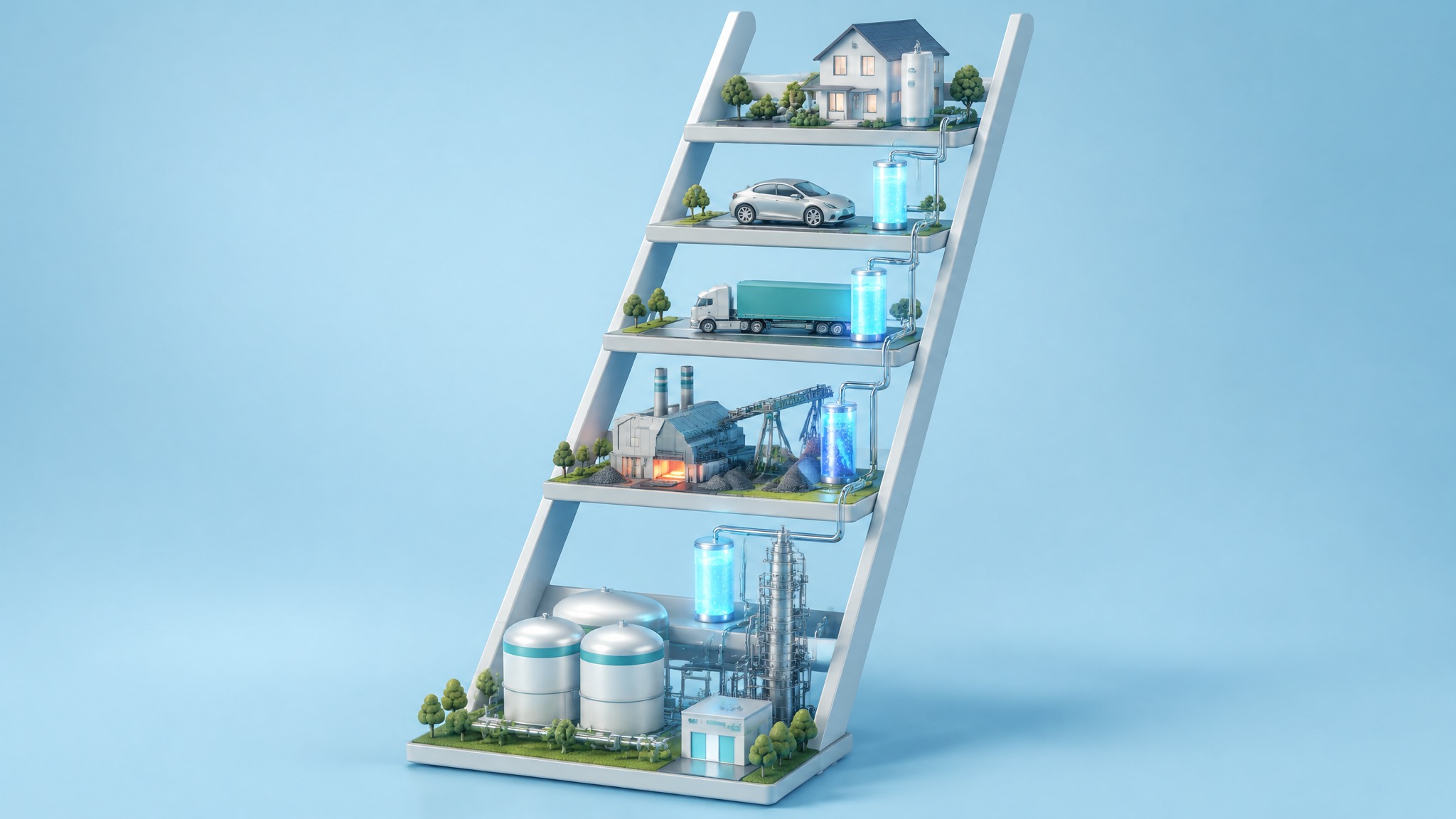
There is also an honest limit to the whole approach. A subsidy can make hydrogen cheaper, but it cannot create demand where hydrogen is the wrong tool. Our guide What Is the Hydrogen Ladder? Where Hydrogen Makes Sense explains which uses have no cheaper clean alternative.
What happens next with the European Hydrogen Bank?
A fourth auction is next: the Commission's Innovation Fund page, checked November 27, 2026, says it will launch in December 2026 with a budget of €500 million, after draft terms were published for consultation on July 9, 2026. Jurisdiction: European Union and European Economic Area. Terms can change before launch, so anyone planning to bid should read the final terms and conditions when they are published.
For a wider view of how projects and policy fit together on the ground, see our beginner's guide What Is a Hydrogen Hub?
Screening a real hydrogen project?
If you are weighing whether a site could make hydrogen at a cost a subsidy and a buyer could cover, H2Hub can help you test it. You can start a project without an account or a card, and your first full project report is free per account. Start a free project screen in H2Hub.
Frequently asked questions
Is the European Hydrogen Bank a real bank?
No. It is a funding program run by the European Commission. It does not take deposits or make loans; it pays a subsidy per kilogram of hydrogen to auction winners.
Who pays for the European Hydrogen Bank?
The EU support comes from the Innovation Fund, which is financed by revenues from the EU Emissions Trading System. Some countries, such as Germany and Spain in the third round, add national money for projects in their territory.
Can projects outside Europe win the auctions?
Not the current auctions, which are for hydrogen produced in the European Economic Area. The bank's international pillar is working on ways to support imports; the Commission's page describes this as design work and studies so far.
How long does the subsidy last?
Up to 10 years, paid only on hydrogen that is certified and verified as produced. A plant that produces less receives less.
Sources
European Commission, Directorate-General for Energy — European Hydrogen Bank. Pillars, auction history, grant agreements, auctions-as-a-service. Checked November 27, 2026.
European Commission, Directorate-General for Climate Action — Innovation Fund: competitive bidding. Fixed premium design, 10-year support, fourth auction. Checked November 27, 2026.
European Clean Hydrogen Observatory — European Hydrogen Bank pilot auction results, May 2024.
EU Transition Pathways portal — EU awards nearly EUR 1 billion to scale renewable hydrogen production, June 2025.
Hydrogen Central — EU awards over €1 billion to European hydrogen projects, reprint of the European Commission announcement, May 2026.
Fact-checked November 27, 2026.
Comments